















Sauna Ventilation: Why It Matters and How to Get It Right (2026)
If there is one element of sauna design that separates an authentic, well-built Finnish sauna from a poorly constructed one, it is ventilation. In Finland, where sauna culture has been refined over thousands of years, ventilation is regarded as one of the most critical aspects of any installation. Sauna from Finland, the international organisation that certifies and promotes the authentic Finnish sauna experience worldwide, lists it among the most important design considerations for any sauna project.
Yet here in the UK, where sauna regulations remain limited compared to those in Finland, ventilation is routinely overlooked, underspecified or omitted entirely. The result is a sauna that heats unevenly, feels stale and uncomfortable to breathe in, deteriorates far faster than it should, and delivers an experience that bears little resemblance to what a properly designed Finnish sauna can offer.
At Finnmark Sauna, ventilation is a cornerstone of every installation we design and build. Whether it is a compact home sauna for a family of two or a large-scale commercial installation for a hotel spa, the ventilation system is planned from the earliest stage of the design process. This guide explains why ventilation matters so much, how a proper system works, where vents should be positioned and what happens when it is done badly.
What Does Sauna Ventilation Actually Do?
A sauna ventilation system serves four essential functions, each of which directly affects the quality of the bathing experience and the longevity of the installation.
Supplies Fresh Air for Breathing
A sauna is a sealed, insulated room operating at temperatures between 70°C and 100°C. Without a steady supply of fresh air, the oxygen in the room is consumed rapidly, and the air becomes stale, heavy and unpleasant to breathe. In Finnish, the quality of the air in the sauna is considered just as important as the quality of the löyly (steam). A well-ventilated sauna feels light and easy to breathe in, even at high temperatures. A poorly ventilated one feels claggy, oppressive and nauseating.

Prevents Heat Stratification
Heat rises. In a sauna without proper airflow, this creates a significant temperature difference between the upper and lower parts of the room. Your head may be uncomfortably hot while your feet remain cool. This phenomenon is known as heat stratification, and it is one of the most common signs of inadequate ventilation. A properly designed system circulates the heated air throughout the room, ensuring the heat and humidity reach the bather evenly, from head to toe.

Removes Stale Air and Volatile Compounds
Sweat, body oils, cleaning product residues and the natural off-gassing of timber all introduce volatile organic compounds into the sauna air. Without adequate exhaust ventilation, these compounds accumulate, creating an unpleasant smell and potentially compromising air quality. A functional ventilation system continuously removes used air and replaces it with fresh air from outside the sauna.
Dries the Sauna After Use
This is perhaps the most overlooked function of sauna ventilation, and one of the most important for the longevity of the installation. After each session, moisture from the löyly, from bathers' sweat and from the cleaning process sits in the timber and in the air. If this moisture is not removed efficiently, it creates the perfect conditions for mould, mildew and timber degradation. A drying vent, typically positioned at or near the ceiling, is opened after the session to allow humid air to escape and the sauna to dry thoroughly.
How Sauna Ventilation Works: The Principles of Airflow
Effective sauna ventilation is based on a simple principle: fresh air enters the room at a low level near the sauna heater, is heated as it passes over or around the heater and stones, rises through the room, circulates over the bathers, and is then extracted through exhaust vents positioned strategically to draw the air across the full volume of the room.
This continuous cycle of intake, heating, circulation and extraction is what creates the even, comfortable heat that defines a well-designed Finnish sauna. Most sauna heater manufacturers recommend approximately six air changes per hour for optimal performance. This means the entire volume of air in the sauna should be replaced roughly six times every hour during operation.
The specific ventilation setup will vary depending on the size and layout of the sauna, the type of heater (electric or wood-burning), the bench configuration, and whether the sauna is a domestic or commercial installation. However, the underlying principles remain the same across all configurations.
Where to Position Sauna Vents: Intake, Exhaust and Drying
In most sauna installations, we recommend two points of air intake and two points of exhaust. The exact positioning will differ from project to project, but the following configuration represents best practice as guided by Finnish sauna design principles.
Intake Vents (Fresh Air In)
The primary intake vent should be positioned low down, near the base of the sauna heater. This is the most critical vent in the entire system. Fresh air entering at this point is immediately heated as it contacts the heater, rises naturally and begins circulating through the room. The intake vent should remain open at all times during operation.
A secondary source of fresh air can be provided by a gap beneath the sauna door. If the door is in reasonably close proximity to the heater, this gap alone may be sufficient as the primary intake in smaller domestic saunas. In larger installations, a dedicated intake vent near the heater is essential.
It is important that fresh air is not introduced above the top of the heater, as this can interfere with the thermostat reading and disrupt the natural convection pattern. Always consult your heater's installation manual for specific guidance on intake vent positioning relative to the unit.
Exhaust Vent (Circulating Air Out)
The primary exhaust vent should be positioned on the wall diagonally opposite the heater, below the bench level, typically around 400mm from the floor. This placement is deliberate: by extracting air at this lower level, it draws the heated air from the ceiling down over the bathers before it exits the room. This is what prevents heat stratification and ensures that the warmth and humidity reach the bather evenly, not just at head height.
This exhaust vent should remain open at all times during the sauna session. In installations where mechanical extraction is used, an in-line fan connected to this vent provides active airflow control.
Drying Vent (Heat Dump)
A second exhaust point, commonly referred to as the drying vent or dump vent, should be positioned at or near the ceiling. This vent serves two purposes. During operation, it can be opened briefly if the sauna becomes too hot, allowing excess heat and humidity to escape rapidly. After the session, it is opened fully to allow the hot, humid air sitting at ceiling level to evacuate, accelerating the drying process and protecting the timber from prolonged moisture exposure.
The drying vent should be fitted with an adjustable ventilation cover so that it can be closed during normal operation and opened as needed.
Connecting Exhaust Vents
In many installations, the primary exhaust vent and the drying vent can be connected into a single duct before the extraction fan, sharing a single wall penetration. This simplifies the installation without compromising airflow performance, and is a common approach in domestic saunas where minimising the number of wall penetrations is desirable.
Ducting Materials: Why Metal Is Essential
All ventilation ducting and extraction components within a sauna system must be constructed from metal, specifically aluminium or galvanised steel. This is a non-negotiable requirement.
Standard plastic ducting, PVC pipe and plastic fan housings are not suitable for sauna ventilation. The air being extracted from a sauna carries significant heat and humidity, and temperatures within the duct can be high enough to soften, deform or even melt plastic components. Beyond the obvious safety concern, failed plastic ducting will compromise the entire ventilation system silently, leaving the sauna poorly ventilated without any visible sign of the problem.
If an in-line extraction fan is specified, it must be rated for high-temperature environments. Standard bathroom extractor fans are not designed for sauna use and will fail prematurely.
You can find suitable ducting, extraction fans, ventilation covers and louvres in our sauna ventilation collection.
Ventilation for Electric vs Wood-Burning Saunas
The core principles of sauna ventilation apply to both electric and wood-burning sauna heaters, but there are some important differences in how the system is configured.
Electric Sauna Heaters
Electric heaters rely entirely on the ventilation system for air circulation. The intake vent near the base of the heater and the exhaust vent below the bench on the opposite wall create a natural convection loop. An in-line extractor fan on the exhaust side is recommended for consistent performance, particularly in larger rooms. The drying vent at ceiling level provides the post-session moisture management.

Wood-Burning Sauna Heaters
Wood-burning heaters introduce an additional airflow dynamic because the combustion process itself draws air. The fire requires a supply of combustion air, and the chimney flue creates a natural draught that pulls air through the room. This can partially assist with ventilation, but it should not be relied upon as the sole source of air exchange. A dedicated ventilation system with intake and exhaust vents should still be installed alongside the flue system.
For wood-burning installations, chimney and flue components must comply with Building Regulations Part J. The flue must be installed by a suitably qualified engineer, and appropriate clearances from combustible materials must be maintained. For more detail on the differences between electric and wood-burning heater installations, see our comprehensive electric or wood-burning heater buyer's guide.

The Role of Battening in Sauna Ventilation
Ventilation in a sauna operates at two levels: the room-level airflow system described above, and the behind-the-scenes ventilation within the wall structure itself. This second layer is where sauna battening plays a critical role.
Sauna battens are installed between the insulation and vapour barrier layer and the interior cladding. They create an air gap that allows the timber cladding to breathe, enables air to circulate behind the visible surfaces, and provides a drainage path for any condensation that forms on the cooler surface of the vapour barrier.
Without this battening layer, condensation accumulates unseen behind the cladding, soaking into the wood from the back. Over time, this leads to warping, mould growth and structural deterioration, often long before any visible signs appear on the interior surfaces.
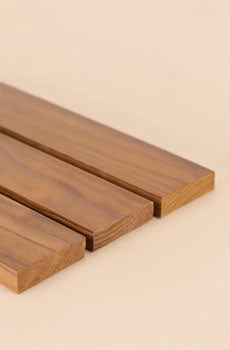
At Finnmark, we use our own proprietary thermo-treated, rhombus-shaped battens. The thermal treatment process upgrades the timber from durability class 5 to class 2, making it significantly more resistant to moisture and dimensionally stable in the demanding sauna environment. The rhombus profile features a chamfered edge and grooves at the rear, allowing condensation to flow down the vapour barrier rather than pooling behind the cladding.
As far as we are aware, Finnmark is the only sauna company in the UK that battens all of its cladding in its entirety as standard practice, in line with Finnish building regulations. It is one of the many details that distinguish a properly specified installation from a budget build.
What Happens When Sauna Ventilation Is Wrong
We regularly encounter saunas, both during servicing visits and when customers come to us after purchasing from other suppliers, where ventilation has been poorly designed, incorrectly installed or simply omitted. The consequences are consistent and predictable.
Stale, Uncomfortable Air
The most immediately noticeable symptom. The air feels heavy, oppressive and difficult to breathe. Bathers may feel lightheaded or nauseous. The löyly feels harsh rather than soft and pleasant. This is almost always a ventilation problem, not a heater problem.
Uneven Heat Distribution
Hot at head height, cool at foot level. The upper bench is unbearably hot while the lower bench barely feels warm. This is heat stratification caused by the absence of a properly positioned exhaust vent to draw heated air downward over the bathers.
Mould, Mildew and Timber Degradation
Without adequate drying ventilation after each session, moisture sits in the timber and in the room. Within months, mould and mildew begin to appear, typically on the ceiling, the underside of benches and in corners. The timber softens, discolours and eventually requires replacement. This is the most expensive consequence of poor ventilation and the one most easily prevented.
Unpleasant Odours
Accumulated sweat, body oils and organic matter that are not removed by proper air circulation become embedded in the timber. Combined with a damp environment, this creates persistent, unpleasant smells that cleaning alone cannot resolve.
For guidance on preventing these issues through regular maintenance, see our complete guide to cleaning a sauna.
Ventilation in Commercial Saunas
Commercial sauna installations in hotels, spas, gyms and wellness facilities face significantly greater ventilation demands than domestic saunas. With the heater running for 12 to 16 hours a day, dozens or hundreds of bathers passing through daily, and water being poured over the sauna stones continuously, the ventilation system must be robust, reliable and professionally specified.
In commercial settings, mechanical ventilation with in-line extraction fans is essential, as passive ventilation alone cannot maintain sufficient air changes at the required rate. The ducting runs may be longer, the fan capacity higher, and integration with the building's wider HVAC system may be required. Multiple exhaust points are often specified to account for larger rooms with benches across different walls.
Ventilation design for commercial saunas should always be carried out by an experienced sauna designer in collaboration with the project's mechanical and electrical engineers. Our team has designed and installed ventilation systems for some of the UK's most demanding commercial projects, from elite sports facilities to large-scale public wellness clubs. Contact us to discuss your commercial sauna ventilation requirements.
Frequently Asked Questions
Why is ventilation so important in a sauna?
Ventilation supplies fresh air for breathing, prevents heat stratification (where the head is too hot and the feet are too cold), removes stale air and volatile compounds, and dries the sauna after use to prevent mould and timber degradation. Without proper ventilation, the air becomes stale and uncomfortable, the heat distributes unevenly, and the sauna deteriorates far faster than it should.
How many vents does a sauna need?
A typical domestic sauna requires at least three vents: an intake vent near the base of the heater, an exhaust vent on the opposite wall below bench level, and a drying vent at or near the ceiling. A gap under the sauna door can serve as a secondary air intake. Larger and commercial saunas may require additional exhaust points.
Where should the intake vent be in a sauna?
The primary intake vent should be positioned low down, near the base of the sauna heater. This allows fresh air to be heated immediately as it enters the room, creating a natural convection current. Avoid positioning the intake above the heater, as this can interfere with the thermostat.
Where should the exhaust vent be in a sauna?
The main exhaust vent should be on the wall diagonally opposite the heater, below bench level, typically around 400mm from the floor. This draws heated air down over the bathers before it exits, preventing heat stratification. A second exhaust (drying vent) should be at or near the ceiling for post-session drying.
Can I use plastic ducting for sauna ventilation?
No. All sauna ventilation ducting must be aluminium or galvanised steel. The air extracted from a sauna carries significant heat and humidity, which can soften, deform or melt plastic components. Standard bathroom extractor fans are also unsuitable. Appropriate metal ducting and high-temperature fans are available in our sauna ventilation range.
How many air changes per hour does a sauna need?
Most sauna heater manufacturers recommend approximately six air changes per hour. This means the entire volume of air in the sauna is replaced roughly six times every hour during operation. Achieving this requires properly sized and positioned intake and exhaust vents, and in many cases an in-line extraction fan.
Is ventilation different for wood-burning saunas?
The core principles are the same, but wood-burning heaters introduce additional airflow dynamics because the combustion process draws air and the chimney flue creates a natural draught. This assists with ventilation but should not replace a dedicated vent system. The flue must comply with Building Regulations Part J and be installed by a qualified engineer. See our electric vs wood-burning heater guide for more detail.
What are sauna battens and why do they matter for ventilation?
Sauna battens are installed between the insulation layer and the interior cladding. They create an air gap that allows the timber to breathe, enables air circulation behind the cladding and provides a drainage path for condensation. Without battening, moisture accumulates behind the cladding, leading to unseen mould and timber degradation. Finnmark uses proprietary thermo-treated battens in all installations as standard.
Does Finnmark design and install sauna ventilation systems?
Yes. Ventilation is an integral part of every bespoke sauna installation we design and build. We also supply a full range of ventilation products for self-build projects and provide free consultations for customers planning their own sauna. Get in touch or call us on +44 (0)20 8050 2895.
Get Your Sauna Ventilation Right from the Start
Ventilation is not something that can be easily retrofitted once a sauna is built. It needs to be planned from the earliest stage of the design process, with vent positions, duct routes and extraction capacity all considered before any cladding goes up. Getting it right from the start is the difference between a sauna that delivers years of comfortable, authentic Finnish bathing and one that feels wrong from day one and deteriorates within a few short years.
If you are planning a self-build sauna, specifying a sauna as an architect or designer, or considering a bespoke installation, our team is here to help. We offer free, no-obligation consultations and can assist with everything from ventilation design through to a complete basket of construction materials for your project.
Contact us or call +44 (0)20 8050 2895 for expert advice on sauna ventilation and every other aspect of your sauna build.


